
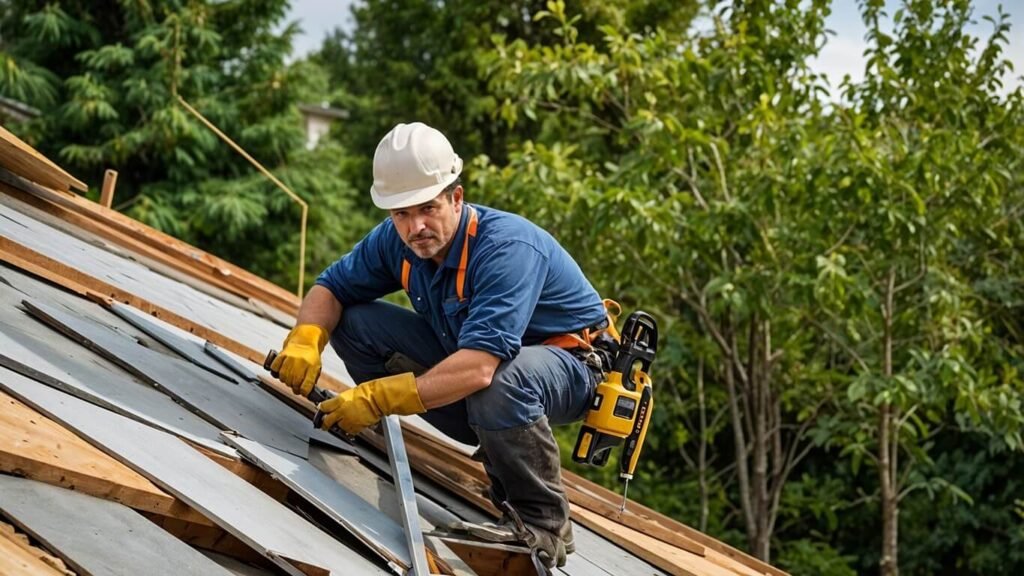
Visible leaks, water stains on ceilings, or damp insulation are often the first indicators that your roof may need attention. Missing, cracked, or curling shingles can also reduce your roof’s ability to protect your property, especially during heavy storms. In some cases, granule buildup in gutters or uneven roof surfaces may signal deeper structural concerns.
Knowing when to repair versus replace your roof depends on several factors, including the age of the roof, the extent of damage, and the frequency of previous repairs. Minor, localized issues can often be resolved with timely repairs, while widespread damage or an aging roof may require full replacement to ensure long-term safety and durability.
Your roof is more than just a structure over your head it’s the first line of defense for your home or business. Timely inspections, repairs, and replacements ensure lasting protection, prevent costly damage, and give you the peace of mind that your property.
Our roof plays a critical role in protecting your home or business from weather, moisture, and structural damage. Over time, exposure to sun, wind, rain, and temperature changes can weaken roofing materials, making it important to recognize early warning signs before small issues turn into costly repairs, regular roof inspections and professional assessments help identify problems early
Signs Your Roof May Need Repair
Your roof often shows warning signs before serious damage occurs. Recognizing these early indicators can help prevent costly repairs and extend the life of your roofing system. One of the most common signs is water leakage, which may appear as stains on ceilings, walls, or in attic spaces. These leaks often indicate damaged shingles or compromised flashing.
- If you notice leaks or water stains on ceilings, walls, or in the attic, it is a clear sign that your roof.
- Shingles that are cracked, broken, curling, or missing compromise the roof’s ability to protect your home.
- Asphalt shingles naturally shed granules over time. Excessive granule buildup in gutters or around the property.
- Sagging sections, uneven surfaces, or dips in the roof indicate possible structural issues.
- If you are constantly patching leaks or fixing minor damage, it may indicate underlying issues with the roof.
Recognizing these early indicators can help prevent costly repairs and extend the life of your roofing system. One of the most common signs is water leakage, which may appear as stains on ceilings, walls, or in attic spaces. These leaks often indicate damaged shingles or compromised flashing.